Newstools for publishers
Visibility in search engines and AI answers
Make sure search engines find your content and AI assistants cite it.
Let's talk about your project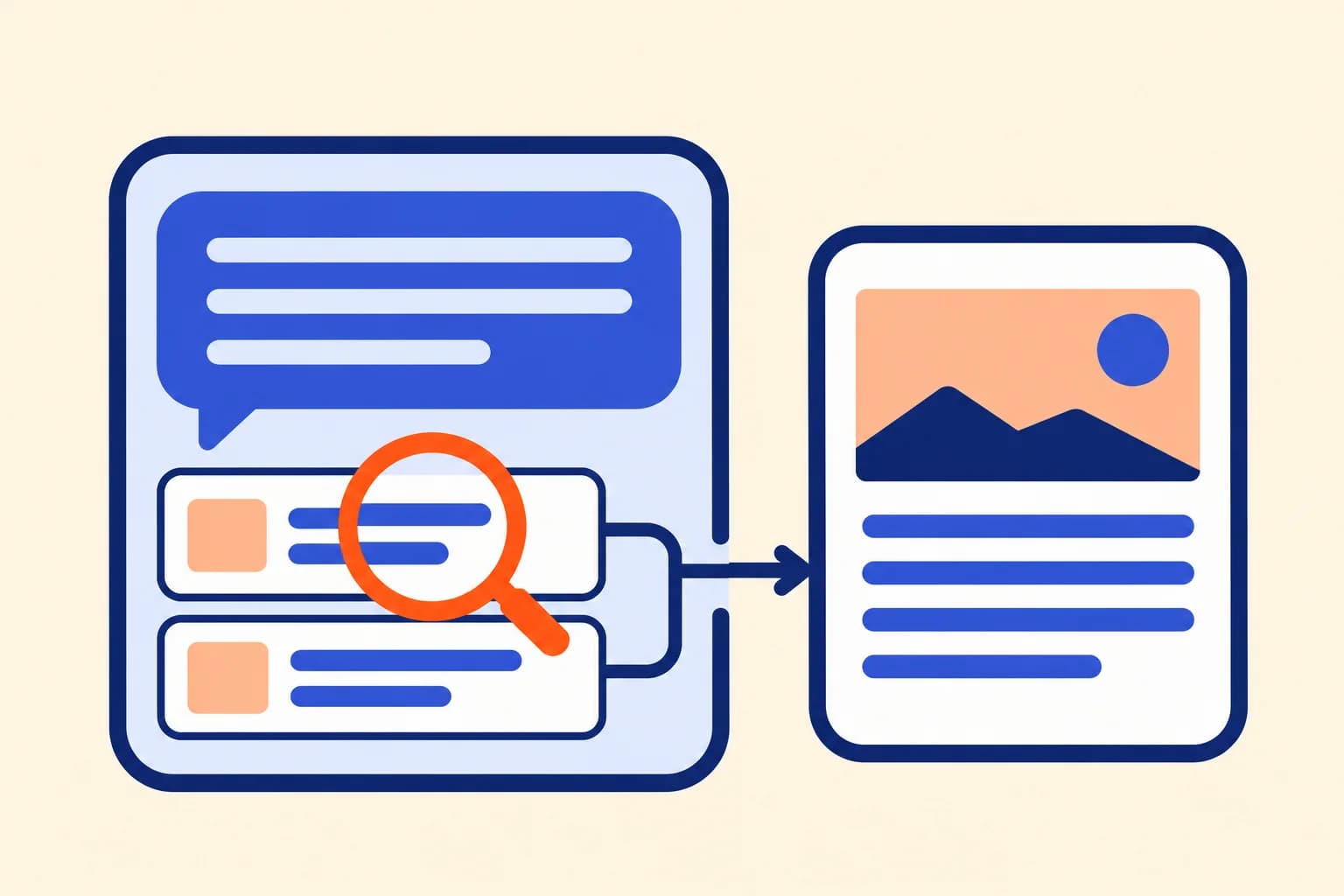
Patterns, not thousands of issues
We group findings by template, brand, and severity, with reproducible evidence.
Citations in AI answers
We measure where assistants cite you and which traffic can be attributed to those references.
Bots, in your logs
Dashboards and alerts on CDN logs to see what Googlebot and AI bots do.
From audit to continuous monitoring
A person decides at this step
- Crawling and templatesWe crawl the site, validate technical signals, and review the critical templates of each brand.
- Logs and botsWe ingest CDN logs and segment by bot, host, response, and asset type.
- AI citationsWe measure citations, sources, and landing pages in assistant answers, and cross them with sessions when analytics is available.
- Findings by patternWe group by template, brand, and severity, with estimated impact and reproducible evidence.
- Priorities and ownersYour team decides what gets fixed first and who takes each block.
- Repeat measurementWe rerun crawls and dashboards on the agreed dates to verify the effect of each fix.
Every finding carries its evidence; your team sets the priority.
What it solves
Readers reach a publisher through two paths that can no longer be separated: classic search and the answers of AI assistants that cite sources. Both depend on the same thing: that crawlers reach your pages, understand them, and consider them reliable. A large publisher site accumulates templates, editions, and languages, and one error in a template repeats across thousands of URLs without anyone noticing.
This service brings together in one piece of work the technical audit of all your brands and editions, the measurement of citations in AI answers, and crawl observability, with a single goal: that search engines and AI assistants find you, with evidence your team can reproduce.
How we work
We start with crawling and indexability: robots.txt, sitemaps, canonicals, metadata, structured data, AMP, images, internal linking, and performance. We combine automated checks with review of the critical templates, and we group findings by pattern instead of delivering thousands of repeated issues.
In groups with several editions, countries, or languages we review hreflang, canonicals, domains and subdirectories, per-language sitemaps, cross-edition linking, and shared templates, and we detect conflicts between versions and differences in indexing.
For AI visibility we measure citations, sources, landing pages, and technical AI-readiness signals. When you have analytics data we connect references to sessions, and we separate visibility, clicks, and page quality to prioritize verifiable improvements.
Crawl observability
CDN logs tell what crawlers actually do on your site. We set up ingestion and analysis with Loki and Grafana, and we segment by bot, host, response, and asset type to detect outages, loops, 404 and 5xx errors, crawl budget consumption, AI bot activity, and changes after each release.
We design dashboards and alerts to investigate specific URLs and compare periods, and we combine them with sitemaps, crawls, and Search Console when access is available. It is the piece that turns the audit into continuous monitoring.
What we deliver
- Reproducible findings with estimated impact and fix priority, grouped by brand, template, and severity.
- A risk map with suggested owners and a sequence of fixes.
- A map of technical decisions for editions and languages, with test cases per template.
- Measurement of citations in AI answers and of the traffic attributable to those references.
- Crawl dashboards and alerts, with a measurement that can be repeated to verify results.
Who it is for
SEO and engineering teams at major publishers and publishing groups that need to prioritize fixes, compare several domains, or monitor a migration. Scope is agreed based on the domains, templates, and data available.
What we have already built
The audit tools we use on every project combine crawling, technical checks, and template analysis, and they produce reproducible findings with configurable scope and data sources. And the log ingestion pipeline we set up on Loki and Grafana is the one that feeds the crawl dashboards.