A single agent can draft a text. An editorial system needs more: identifiable sources, steps with clear responsibilities, quality controls, cost visibility, and a person able to stop or correct the result.
Specialize the tasks
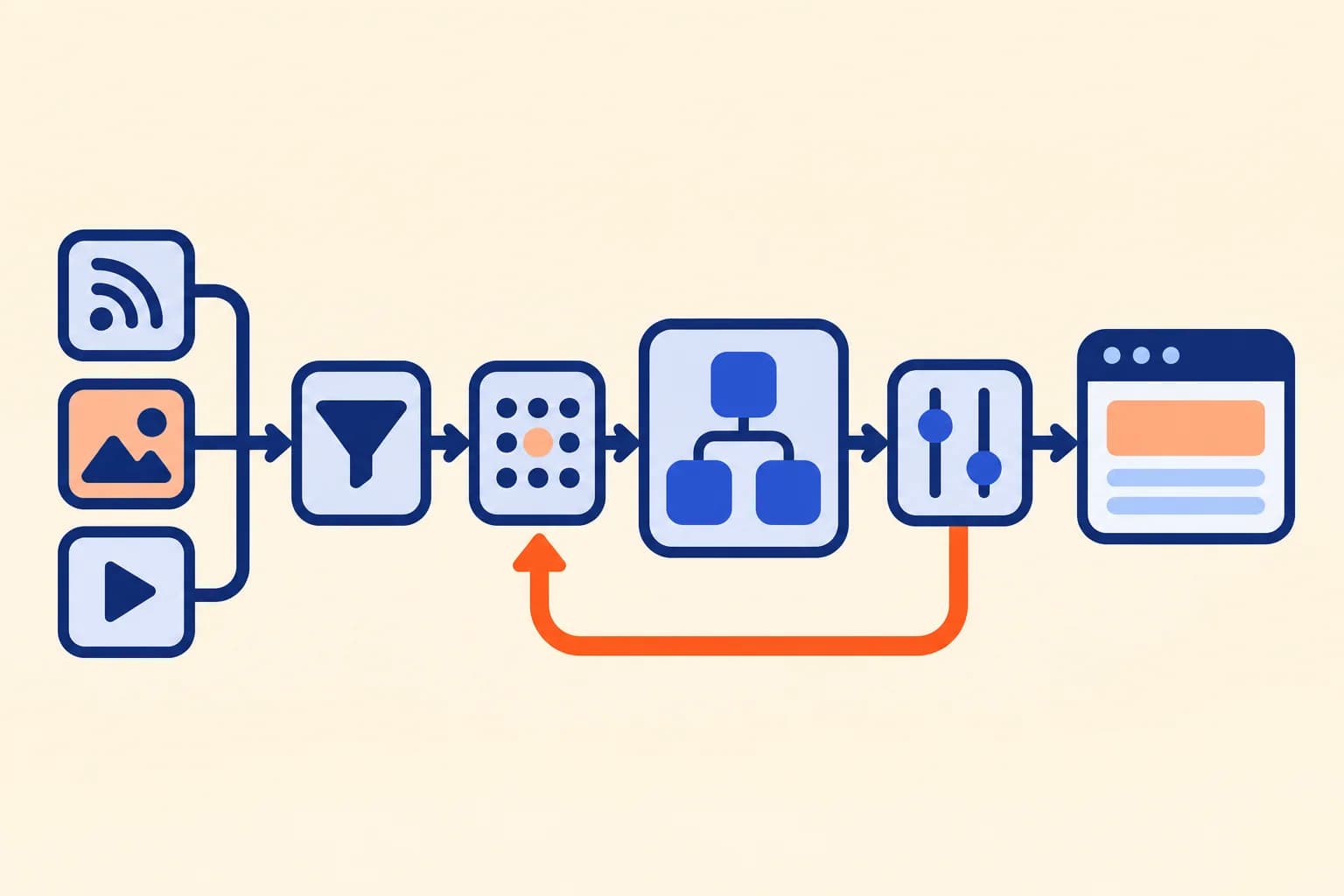
We separate discovery, extraction, analysis, synthesis, drafting, claim checking, style evaluation, and export. Each module has defined inputs and outputs. The orchestration decides what happens if a source is missing, if a claim cannot be verified, or if a result fails editorial criteria.
Useful traces, not just technical logs
We record which sources were used, which prompt and model version took part, what decision each step made, and what it cost. This makes failures reproducible, allows configurations to be compared, and explains why a piece did or did not reach the CMS. Without that record, later review becomes guesswork.
The editorial gate
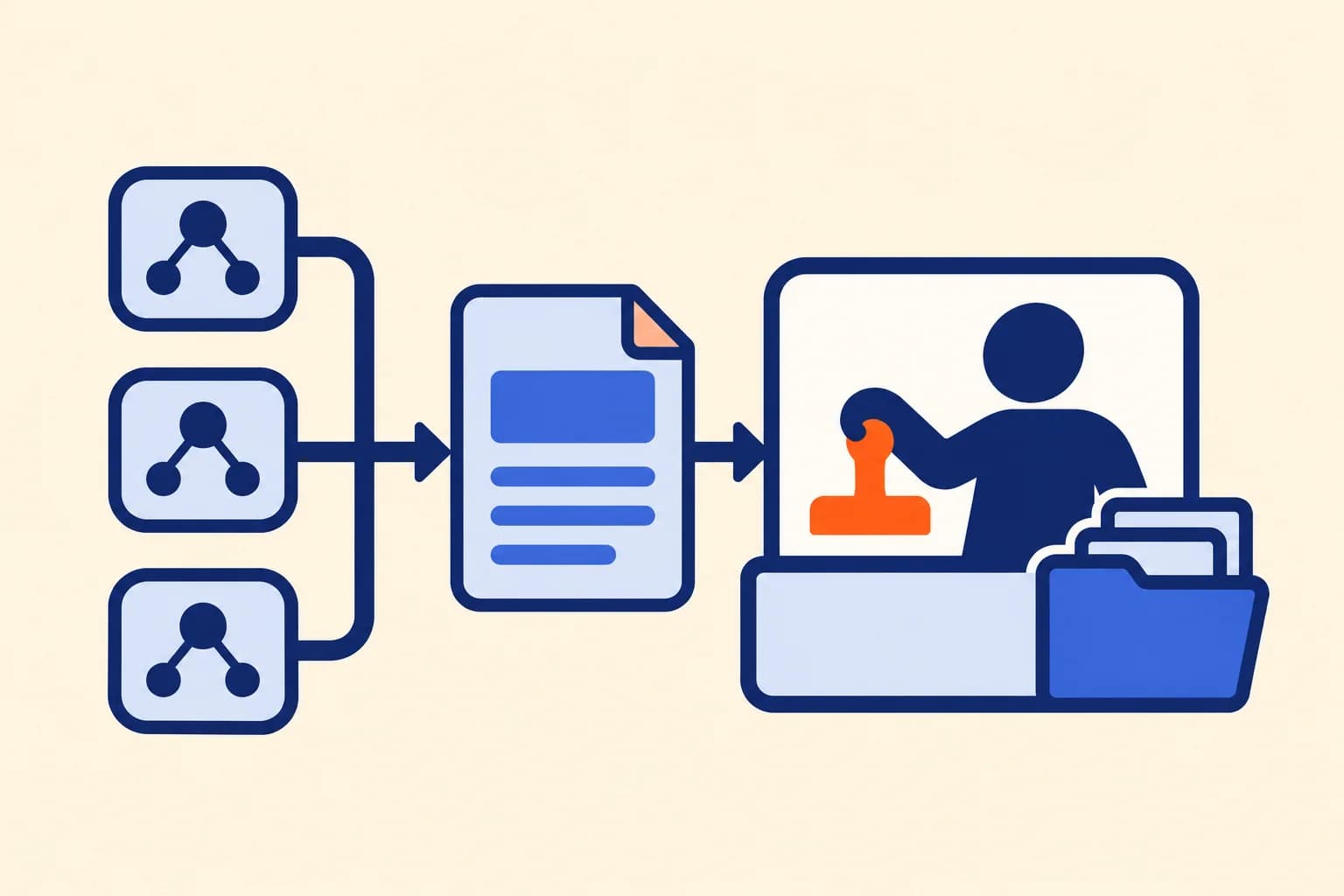
Before publication, a quality gate checks sources, names, figures, quotes, similarity to the original material, and style rules. Doubts are not resolved by faking certainty: they go to review. Automatic export should only be enabled once the team has approved criteria, thresholds, and exceptions.
Automation is useful when it reduces repetitive work and leaves editors more time to investigate, decide, and answer for what is published.