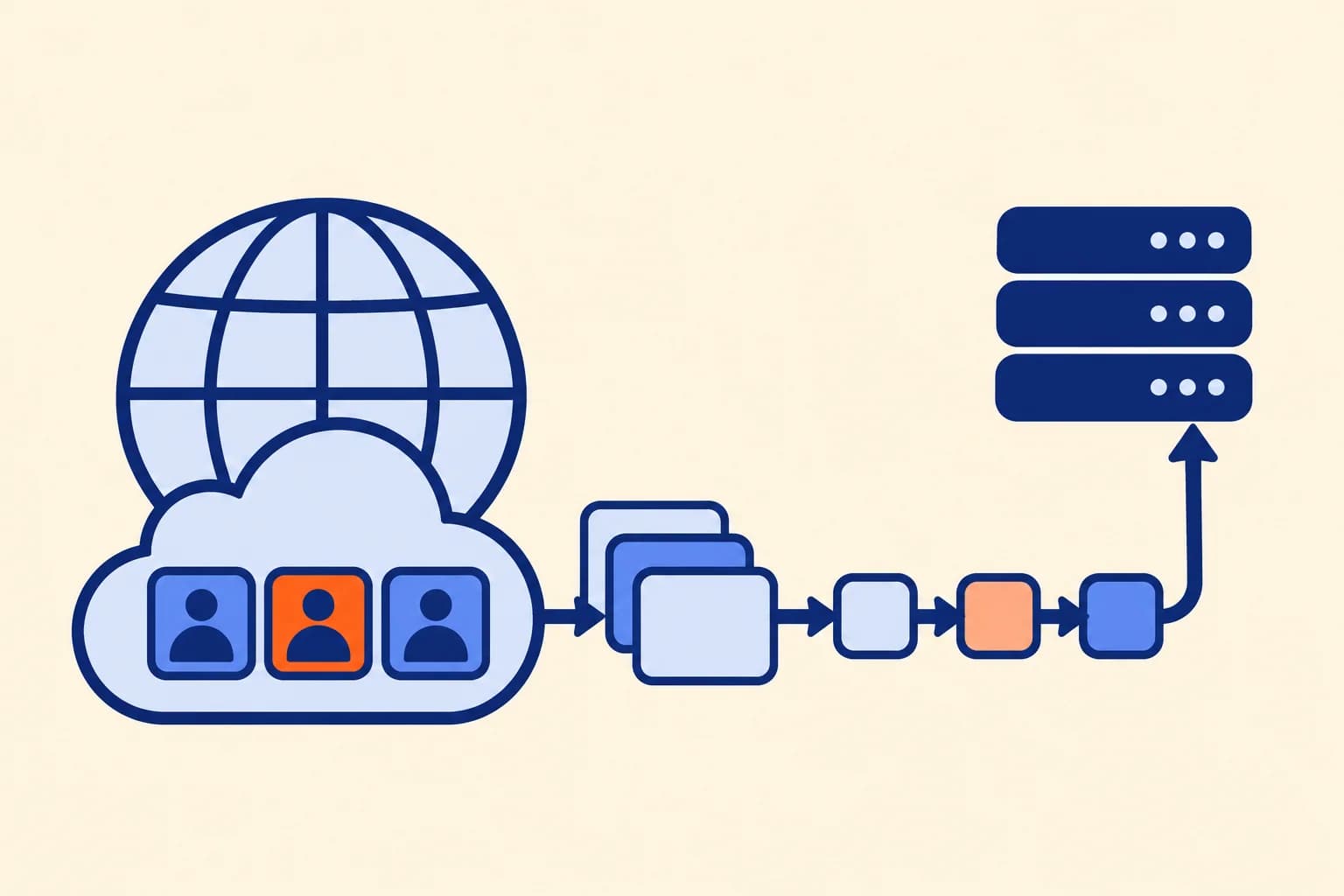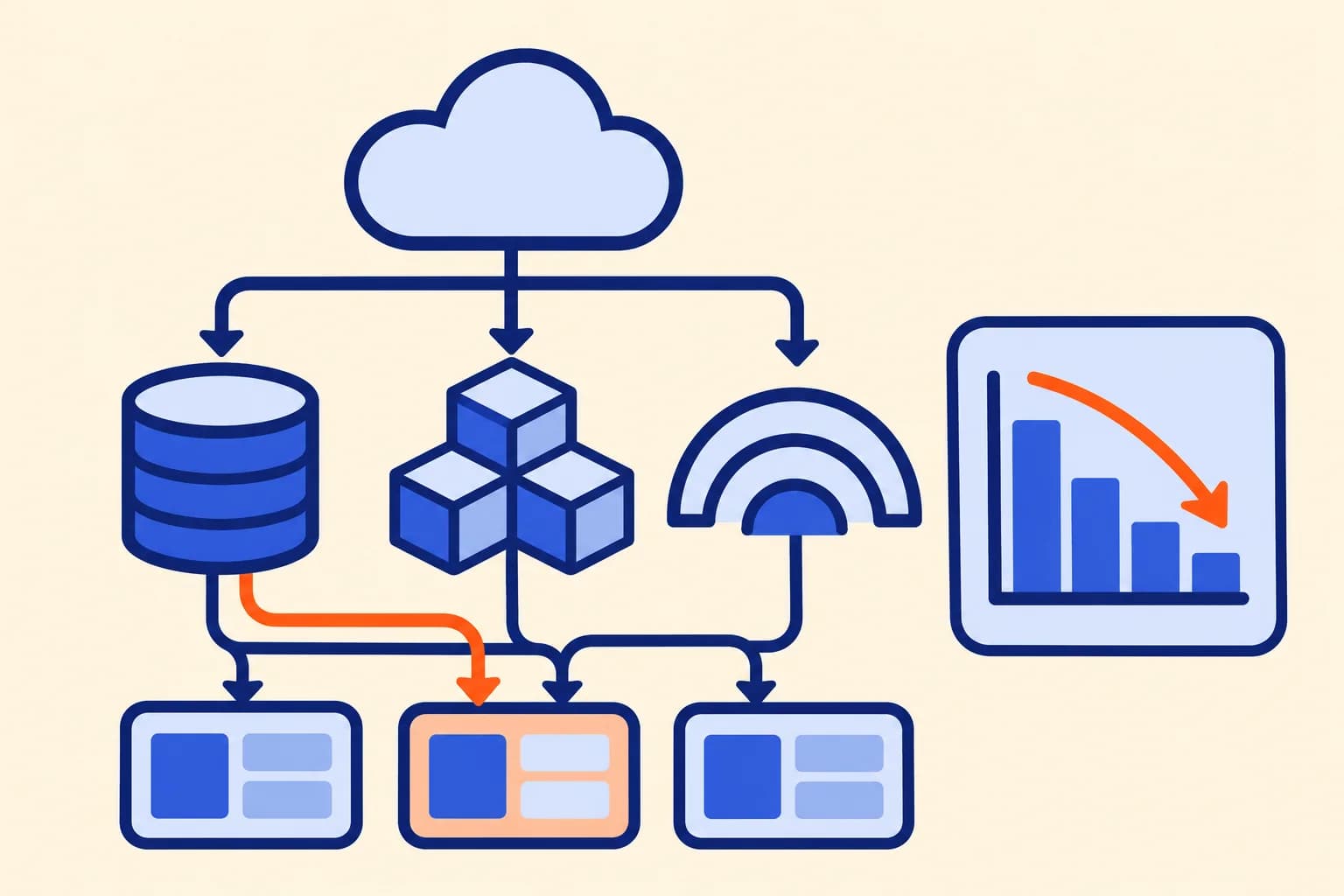
Optimizing an AWS bill begins by connecting costs to products and dependencies. One account can contain a website, mobile applications, historical archives, and machine-learning services. In our work on an international platform, we have combined cost and infrastructure analysis with modernization plans. The first question is what each resource supports and what would happen if it changed.
Inventory before savings
We reconcile consumption by service, region, and period with the actual resources: compute, volumes, databases, storage, logs, load balancers, networking, and CDN. A stopped instance may still incur disk costs; an old bucket may contain an archive needed for a recovery. Tags help, but observed relationships and owners complete the map.
Review distinguishes active systems, test environments, obsolete resources, and dependencies with no clear owner. Results include evidence and a confidence level. We do not run a bulk cleanup to discover afterward what another team relied on.
Design measures by resource type
For storage, we analyze classes, versions, retention, and access frequency. A lifecycle policy must consider recovery time and cost. For logs, we review how much is ingested, what is retained, and whether retention actually takes effect. For compute and databases, we compare load, operating windows, and safety margins before adjusting size.
Content delivery requires reviewing caching, image transformations, origin traffic, and protection. CDN costs can depend on account agreements and commitments, not only on public pricing. Changing architecture or account requires reviewing those conditions alongside the technical dependencies.
Separate forecast, change, and result
A plan estimates savings under assumptions; an applied change records what was done; a later measurement verifies the effect. These are three related documents with different claims. We do not present the forecasts from this case as bill reductions already achieved. Amounts need a comparable window and an explanation of traffic variations.
Execute with recovery options
Measures are ordered by impact, risk, and reversibility. We retain snapshots, backups, and rollback plans. A parallel environment makes it possible to test an extraction or modernization without dismantling the origin too early. Observability validates health, performance, and business behavior after each phase.
Our scope can cover diagnosis, architecture, migration, and operation of the agreed layers. What we deliver is a verifiable plan and an execution with owners and controls. The team retains documentation to understand the bill, review dependencies, and decide the next measures with data.